

10/03/2026
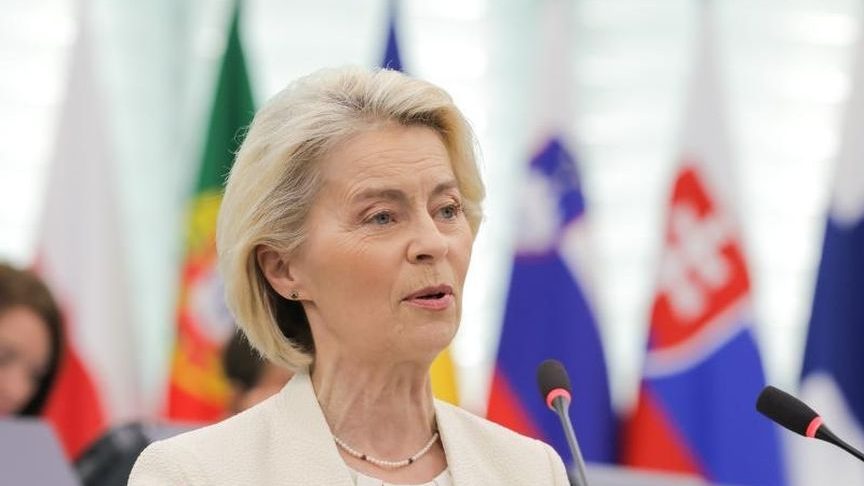
Von der Leyen’s State of the Union address 2026
SOTEU priorities and initiatives
In response to the growing threat of hybrid warfare, von der Leyen and the High Representative will propose, together with the High Representative/Vice-President (HR/VP), a new European security strategy to strengthen the Union’s security. Further-more, the Commission will set out proposals to establish a European Security Council, involving partners such as Canada, Norway, Ukraine and the United Kingdom. Together with Ukraine, there are plans to develop an affordable, modular missile defence system, as well as a programme for joint projects with Ukrainian companies using remaining SAFE funds.
In her speech, von der Leyen also proposed making Canada the EU’s first associate member. Von der Leyen announced plans to move from the CETA trade agreement to an “Alliance for the Future”. The plans include establishing a technology alliance, integrating defence industrial bases, and cooperating in areas such as energy, critical minerals and batteries, as well as in AI, quantum technology, cyber security and supply chain security.
Furthermore, the Commission’s initiatives aim to strengthen Europe’s competitiveness and economic security, for example by completing the overhaul of the single market by next year (‘One Europe, One Market Roadmap’), establishing a European Corporation on Critical Raw Materials and launching a pact against gold-plating. The presentation of a framework for climate resilience, planned for October, and a European Heatwave Plan are intended to improve Europe’s preparedness for the impacts of climate change.
In the digital and technological sectors, initiatives will be presented in November covering key AI sectors such as healthcare, transport, the agri-food industry, advanced manufacturing, defence and space. The focus will be on putting people’s interests first. In terms of social policy, the focus is the Quality Jobs Act, to be presented on 15 September 2026, and a European Care Deal. On 17 September, the EU KIDS ACT was announced as a legislative proposal to protect children and young people from the dangers of social media.
Further initiatives include border protection whilst upholding fundamental rights, and a Mediterranean initiative for skills and employment for young people. A new Congress of Europe is planned for next year, to be held 70 years after the Treaties of Rome, with the aim of developing a vision that will inspire the new generation of Europeans. Furthermore, roadmaps will be presented for the candidate countries that are furthest advanced in the EU accession process.
Relevance for international academic exchange
Although international academic exchange and cooperation are not explicitly mentioned in the Commission’s State of the Union address, several of the initiatives outlined offer potential for greater engagement in these areas. Especially noteworthy is the planned development of closer relations with Canada, potentially leading to an association with the EU.
In his speech to the European Parliament on 17 September, Prime Minister Mark Carney welcomed this prospect against a backdrop of shared values and talked about benefits of potential Canadian membership of the EU’s Erasmus+ programme and the EU’s forthcoming research and innovation investment programme (Link). Participation in the next Horizon Europe programme would make it possible to pool resources, collaborate on cutting-edge technologies and strengthen links between leading research institutes and universities on both sides of the Atlantic. Canada has been participating in the current programme as an associated country since 2024, so far only in Pillar 2 (joint research projects). The topic of research cooperation is set to feature on the agenda of the upcoming EU-Canada Summit in October (ScienceBusiness: Link). Regarding Erasmus+, Carney spoke positively about the international mobility opportunities for young people. Exchanges with Canada are already possible today, for example through Erasmus Mundus Joint Master’s Programmes; associate membership would expand these opportunities.
It is striking that the European University Alliances were not mentioned either in the speech or in the SOTEU catalogue of measures on the website (Link, as at 22 October 2026). However, the SOTEU declaration of intent presents ‘European University Alliances 2.0’ as one of the new initiatives (Link). In her LinkedIn post of 22 September (Link), Director-General Pia Ahrenkilde-Hansen sets out the plan in more detail and announces that this initiative will be launched in 2027. It is intended to build on the achievements of the 73 alliances established to date and further strengthen their potential in education, research and societal contribution. Among other things, the aim is “building collective strength in areas that are decisive for Europe’s competiveness, enabling also universities to respond together to the AI challenge and the global competition for talent”. As part of the ‘Union of Skills’, work is to be taken forward on establishing a legal status for the alliances and on a fully-fledged European degree, following the awarding of the first European Degree Labels this summer.
Further impetus for academic exchange could come from the newly announced Mediterranean Youth Skills and Jobs initiative – part of the Pact for the Mediterranean, which was presented in October 2025 – which aims to tackle youth unemployment in North Africa and the Middle East. The new initiative will link investments in key sectors of southern Mediterranean economies to training and job creation for young people and will be integrated into furture iterations of the Pact’s Action Plan. Furthermore, it will complement the EU Fair Labour Mobility Package, adopted in September 2026, by promoting skills portability in the southern Mediterranean countries.
The fact that EU programmes are scarcely mentioned in the speech may be due to the fact that the Council and the Parliament must first consolidate their positions before the trilogue – which is not expected to begin before 2027 – can take place and an agreement between the EU institutions is sought. However, the importance of EU programmes such as Erasmus+ and Horizon Europe is implicitly and exemplarily highlighted in the speech. The shared career path of the two founders of the tech start-up ICEYE, from Poland and Finland – which has since become one of the world’s leading space technology companies, with offices in four EU countries – began during a joint Erasmus+ study placement. After the start-up was founded, it received further support through a Horizon Europe research project, following which the start-up succeeded in securing private investment.