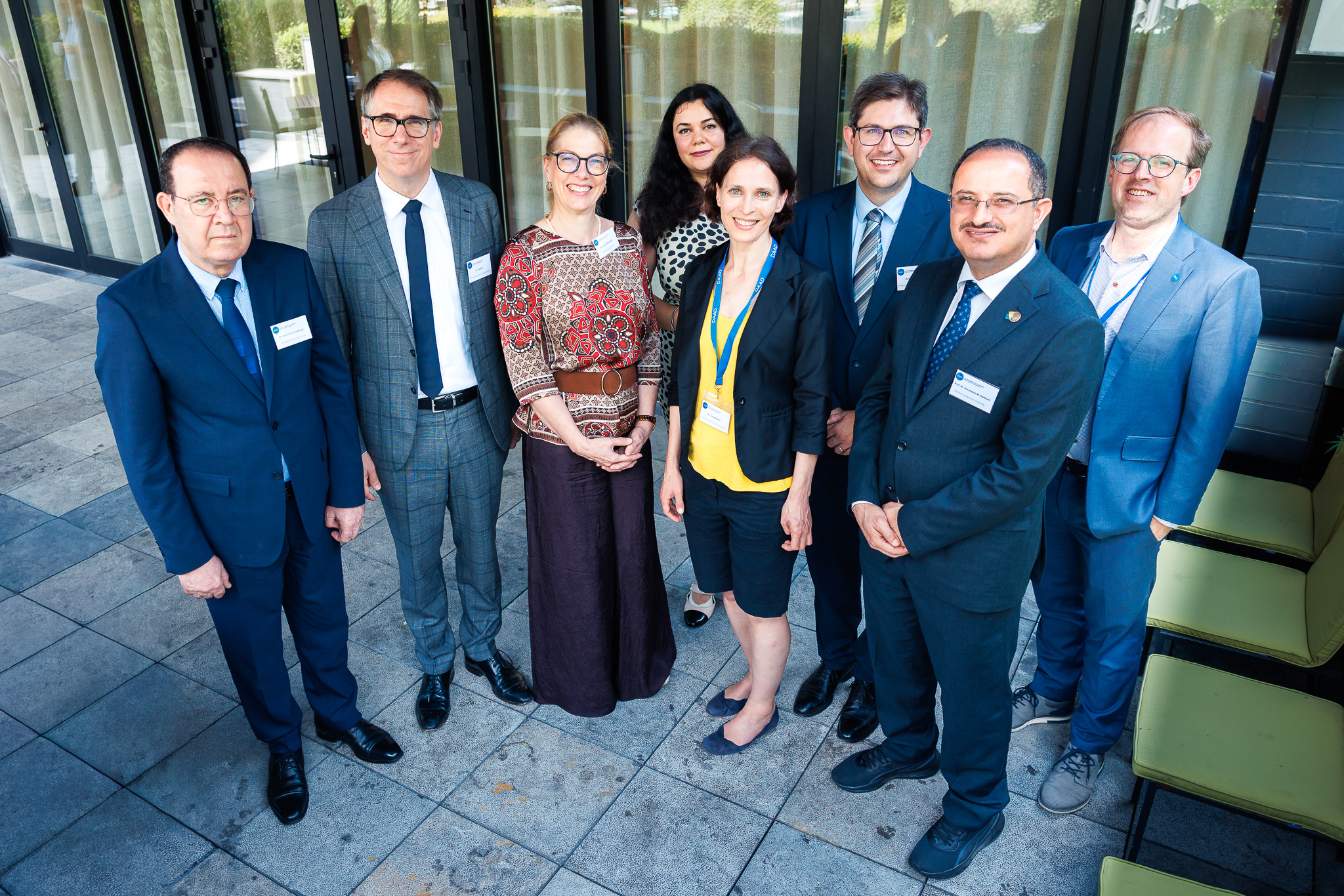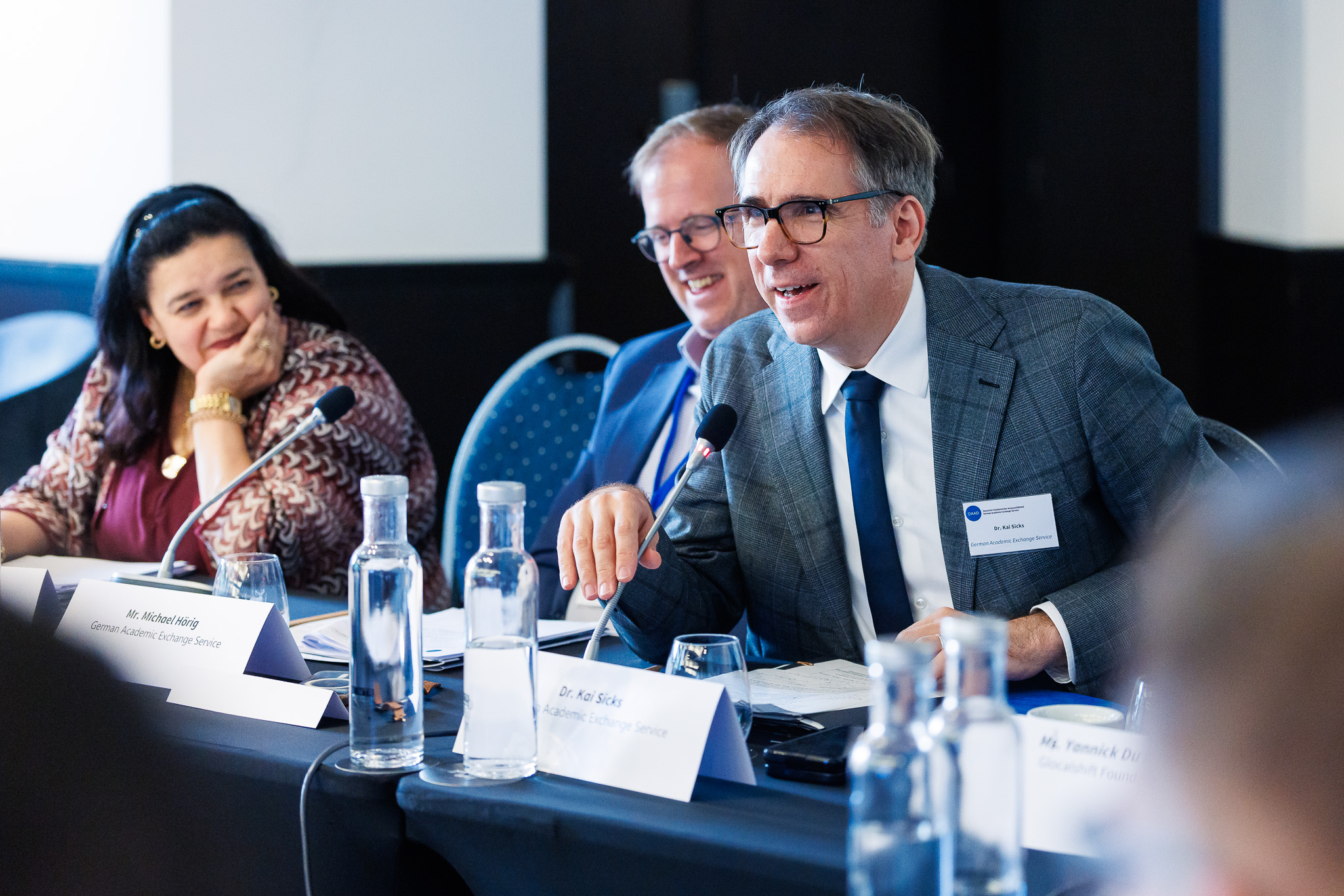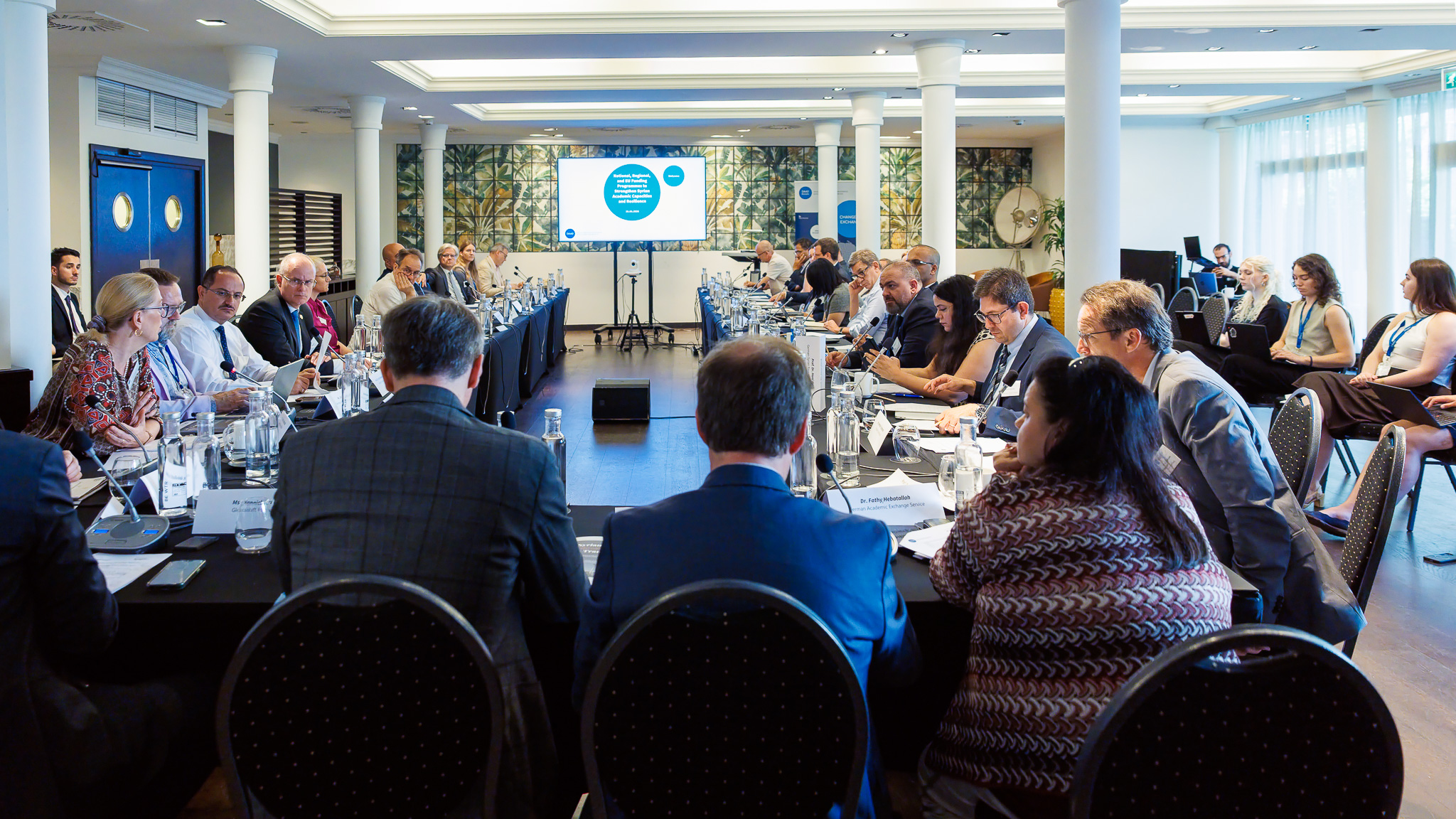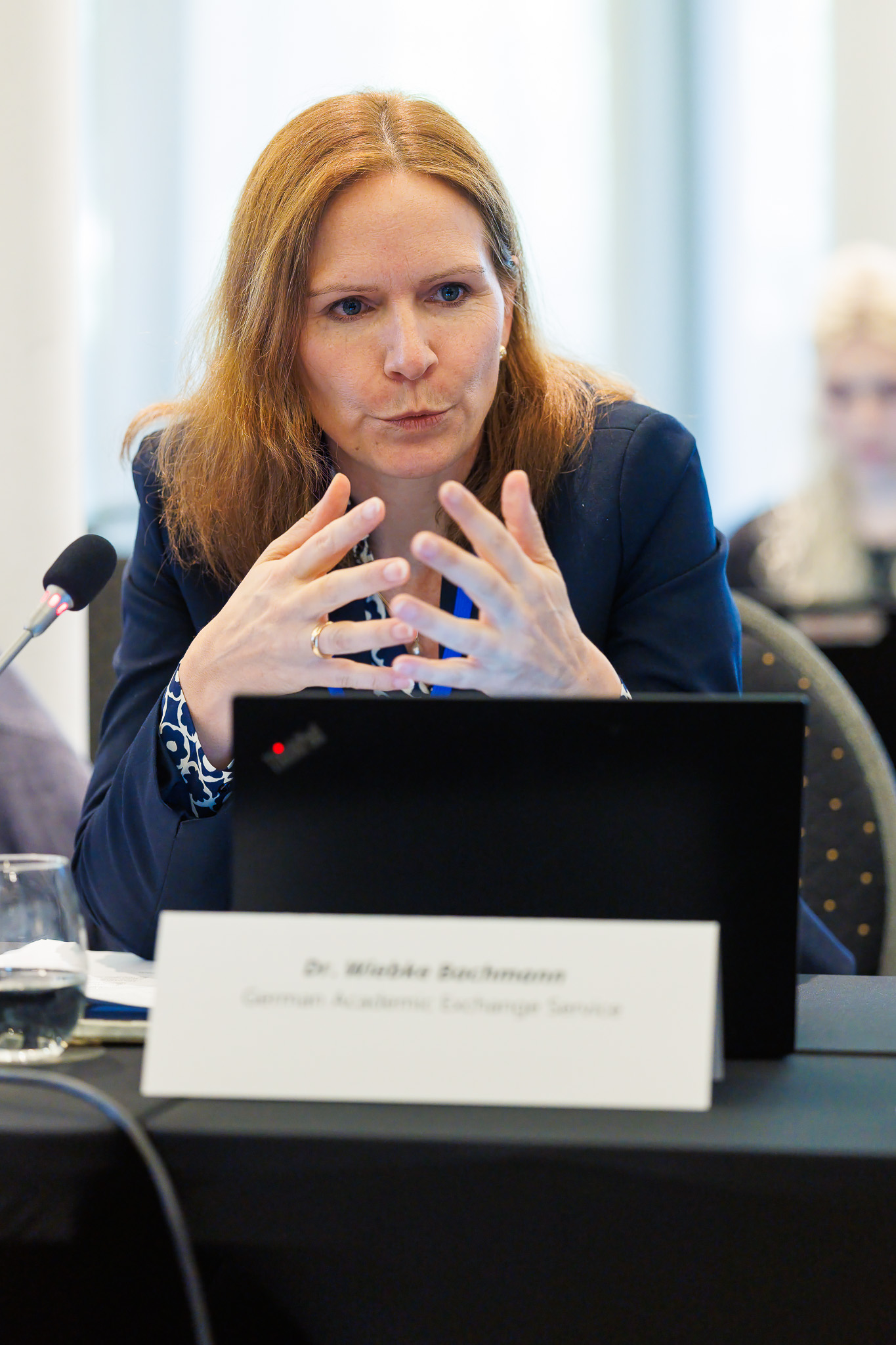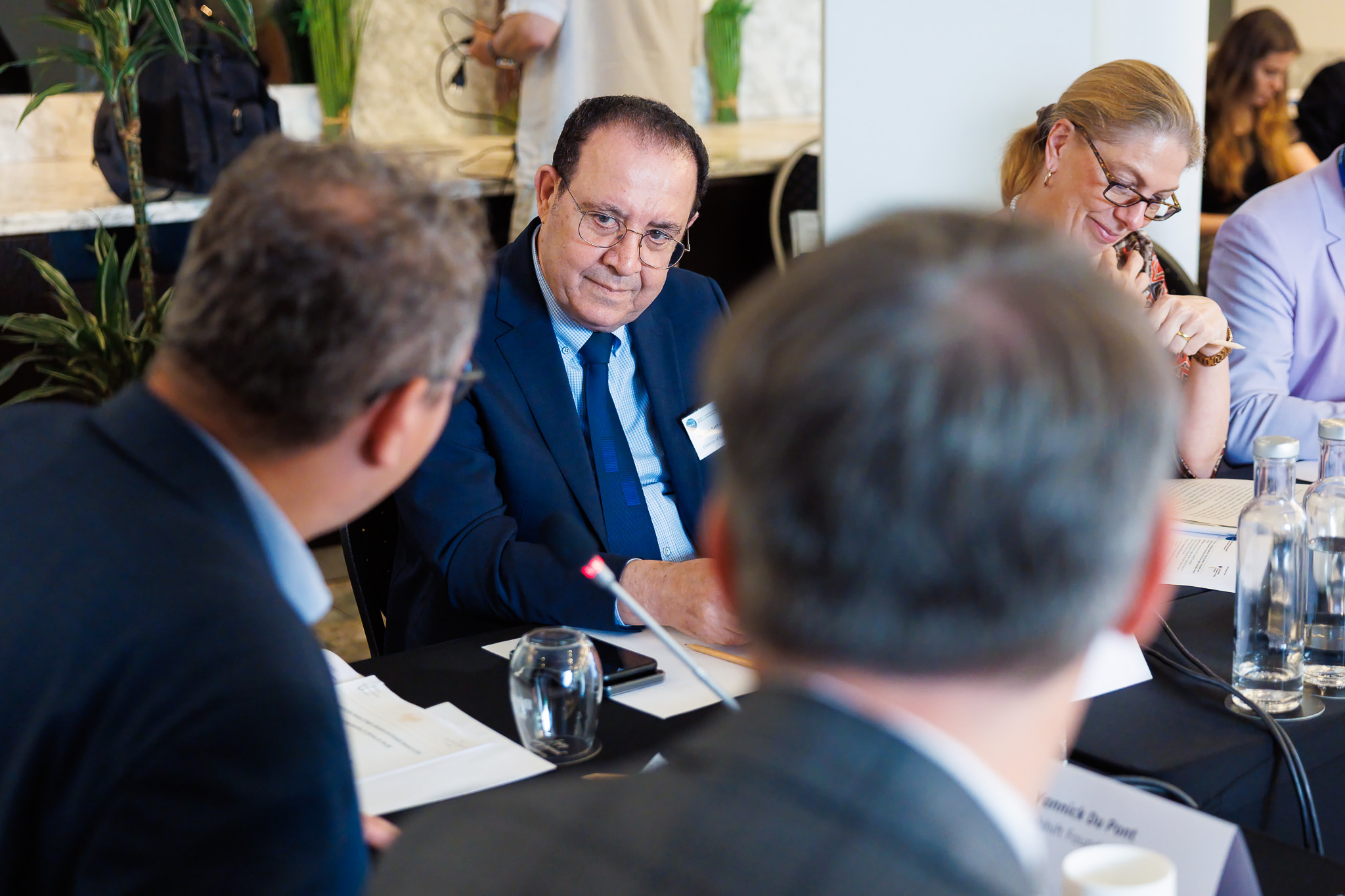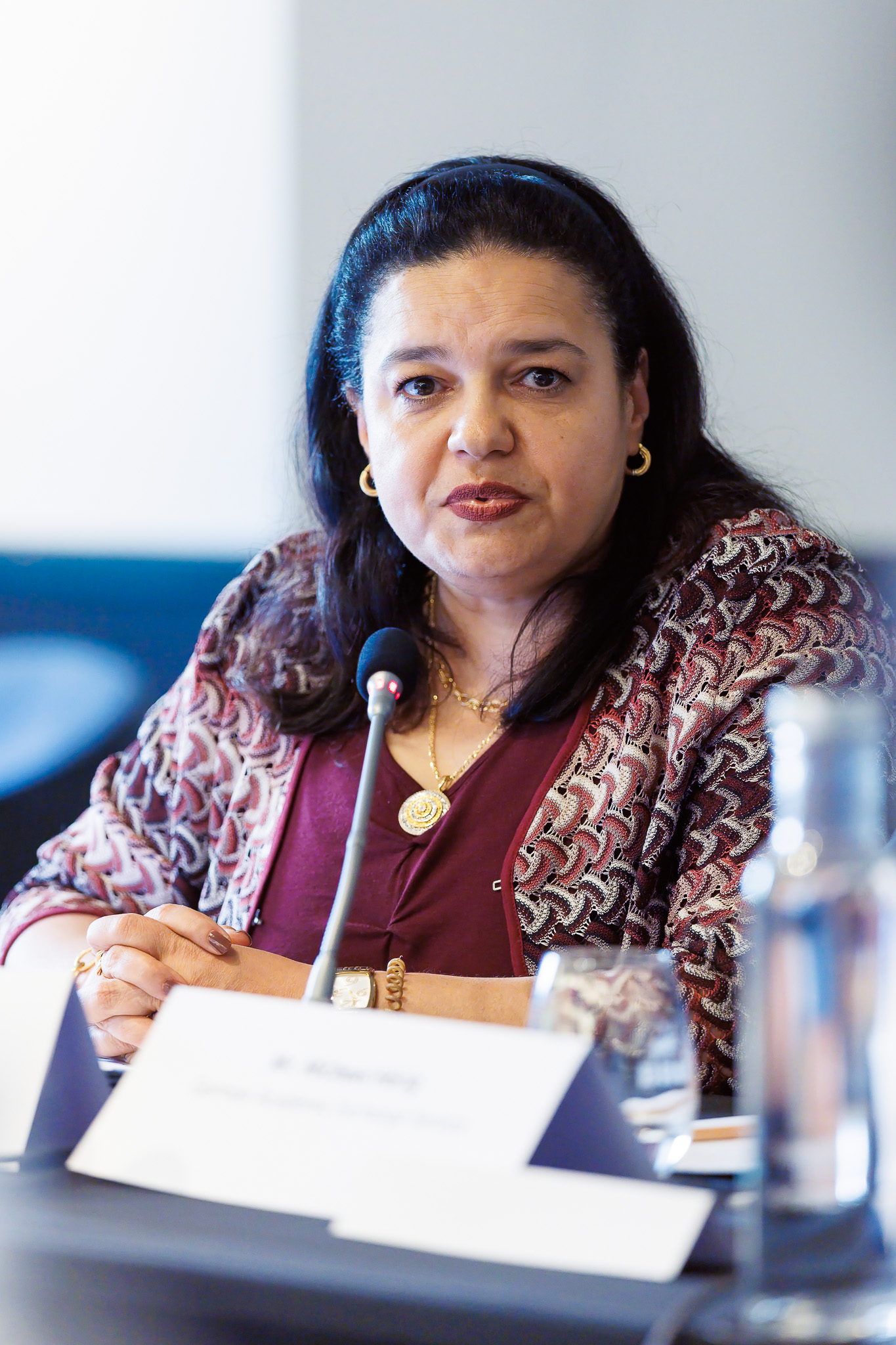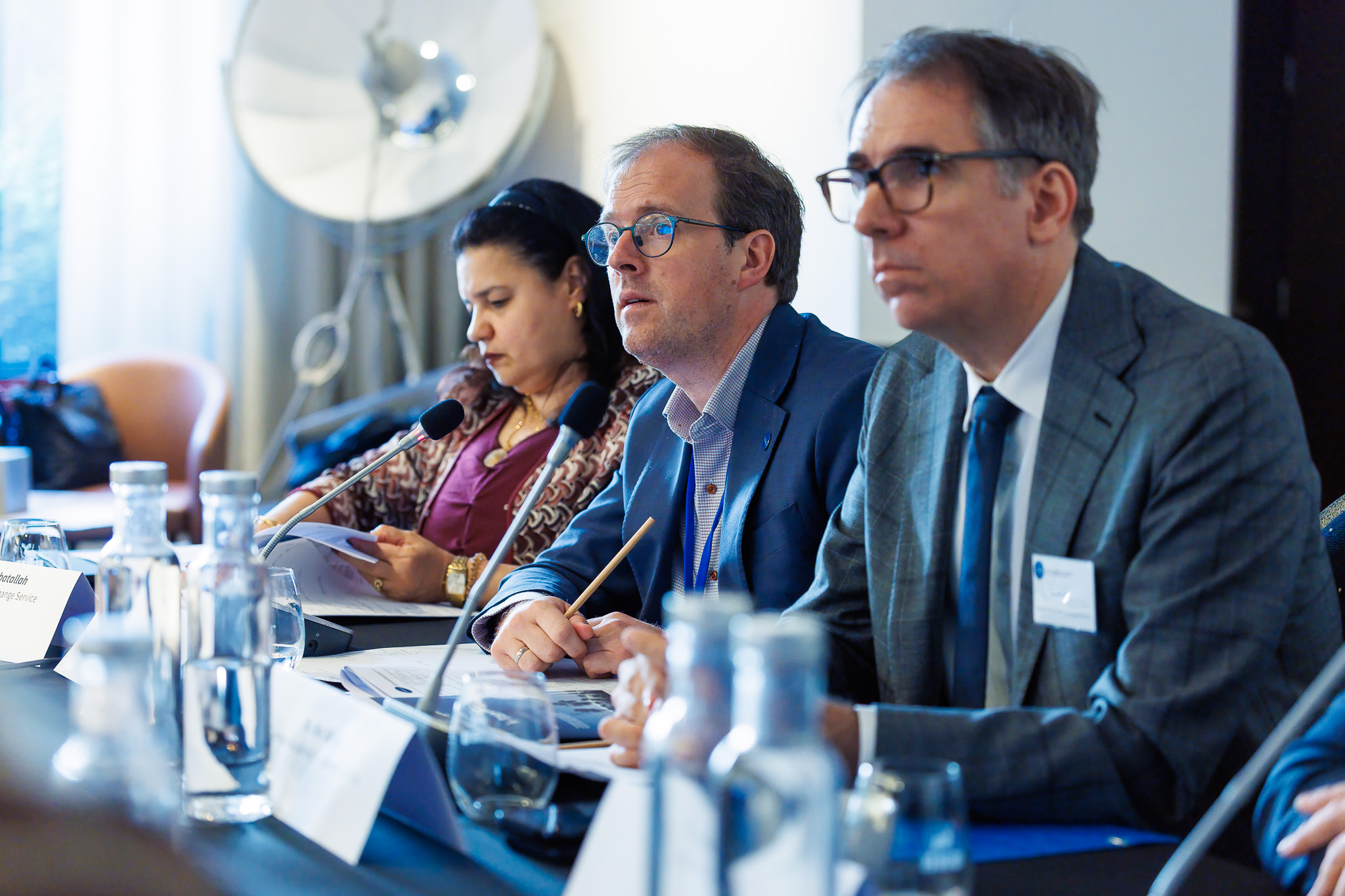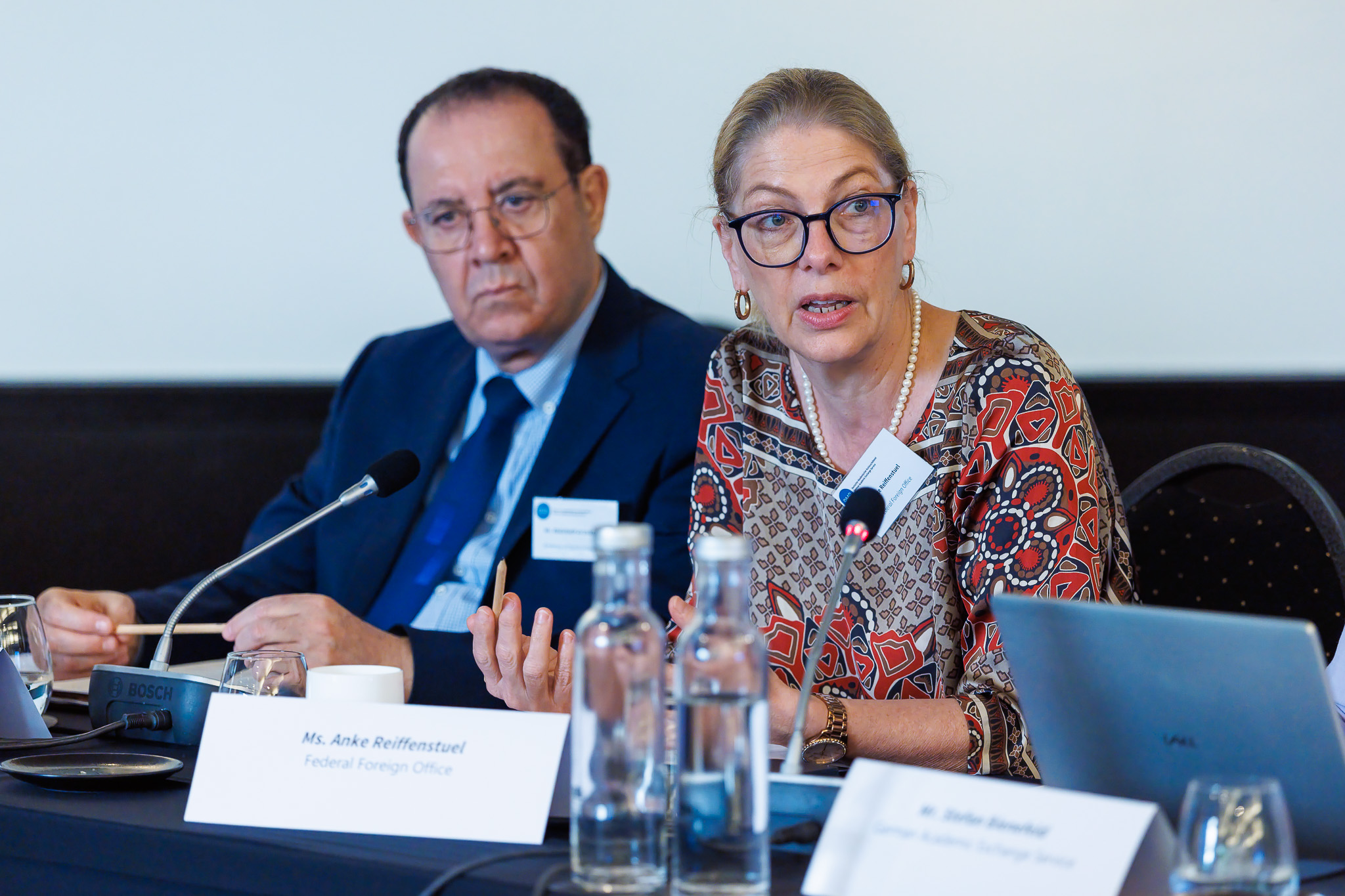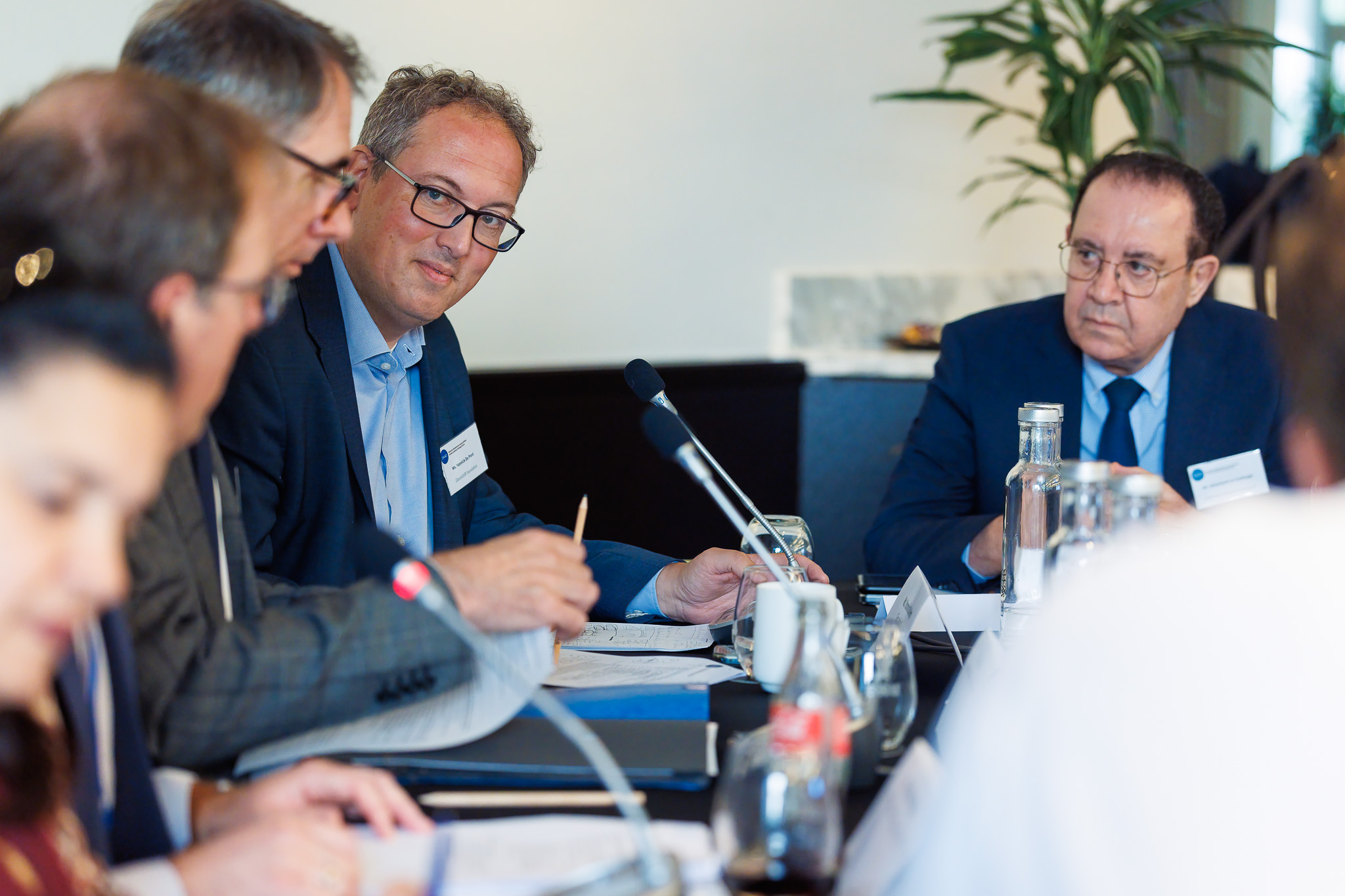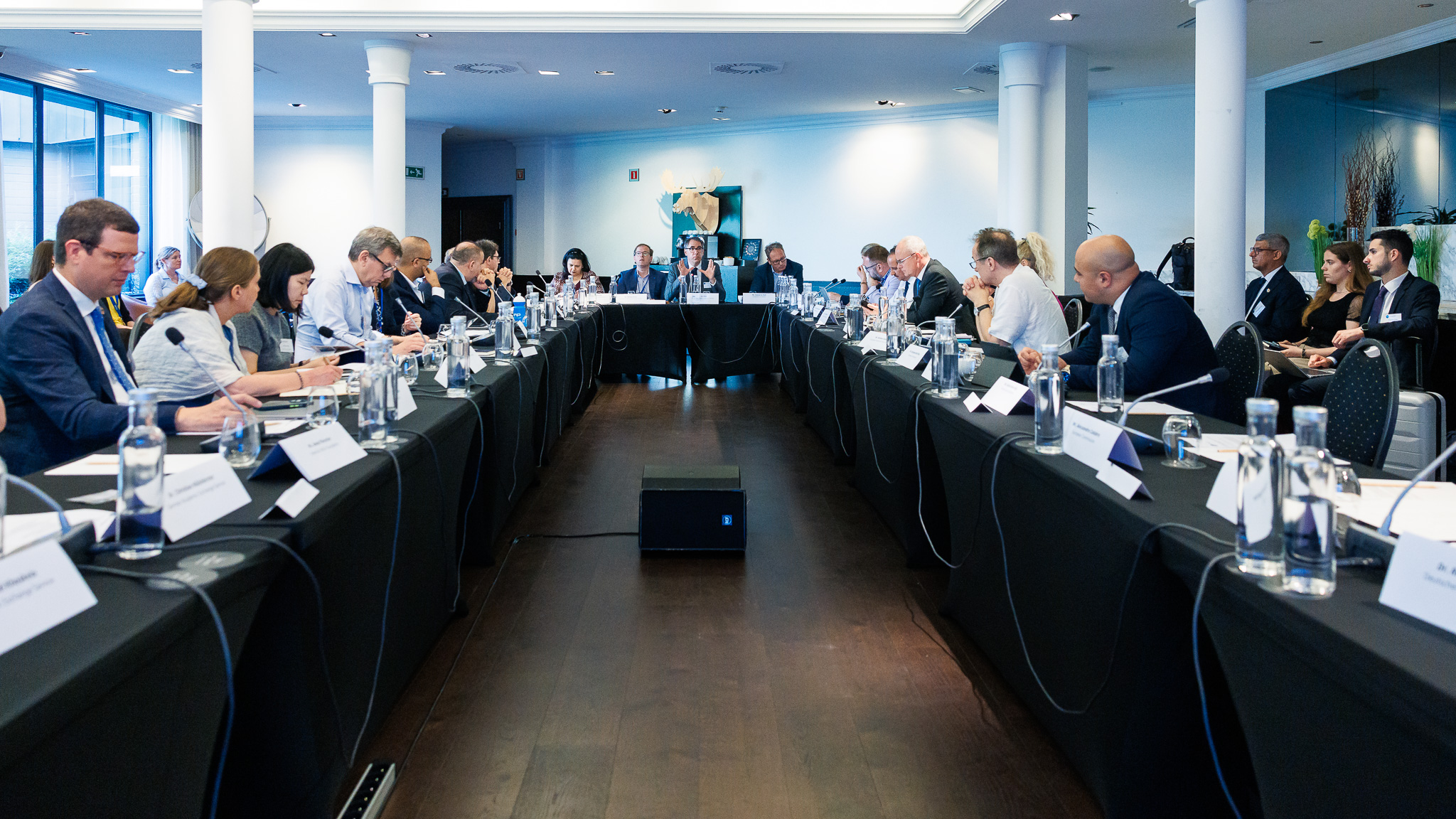


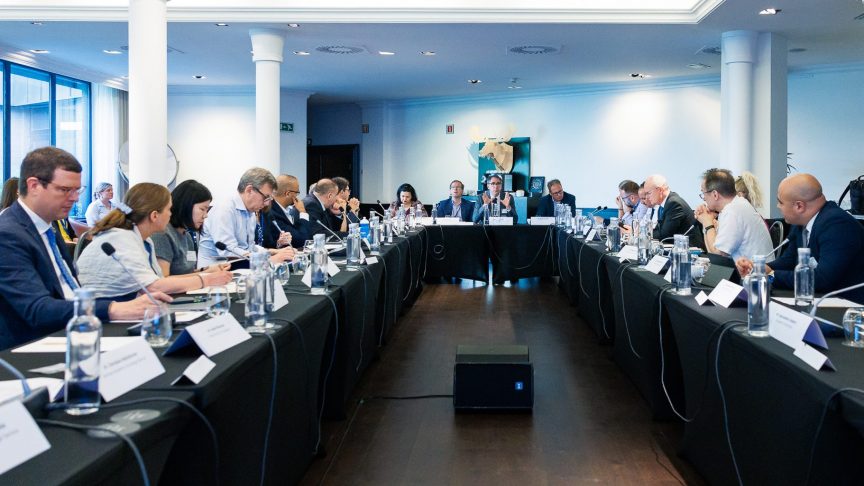
Roundtable "National, Regional, and EU Funding Programmes to Strengthen Syrian Academic Capacities and Resilience"
The conflict in Syria has had a profound impact on the country’s higher education system, disrupting academic institutions, displacing students and scholars, and threatening the continuity of education, research and knowledge production. At the same time, Syrian students, doctoral candidates, and academics continue to demonstrate resilience and commitment to their education and the advancement of higher education in Syria, respectively, both from within the country as well as through the impact of the diaspora abroad. Supporting this human capital is essential not only for individual futures but also for the capacity, reconstruction and development of Syria’s higher education system and society as a whole.
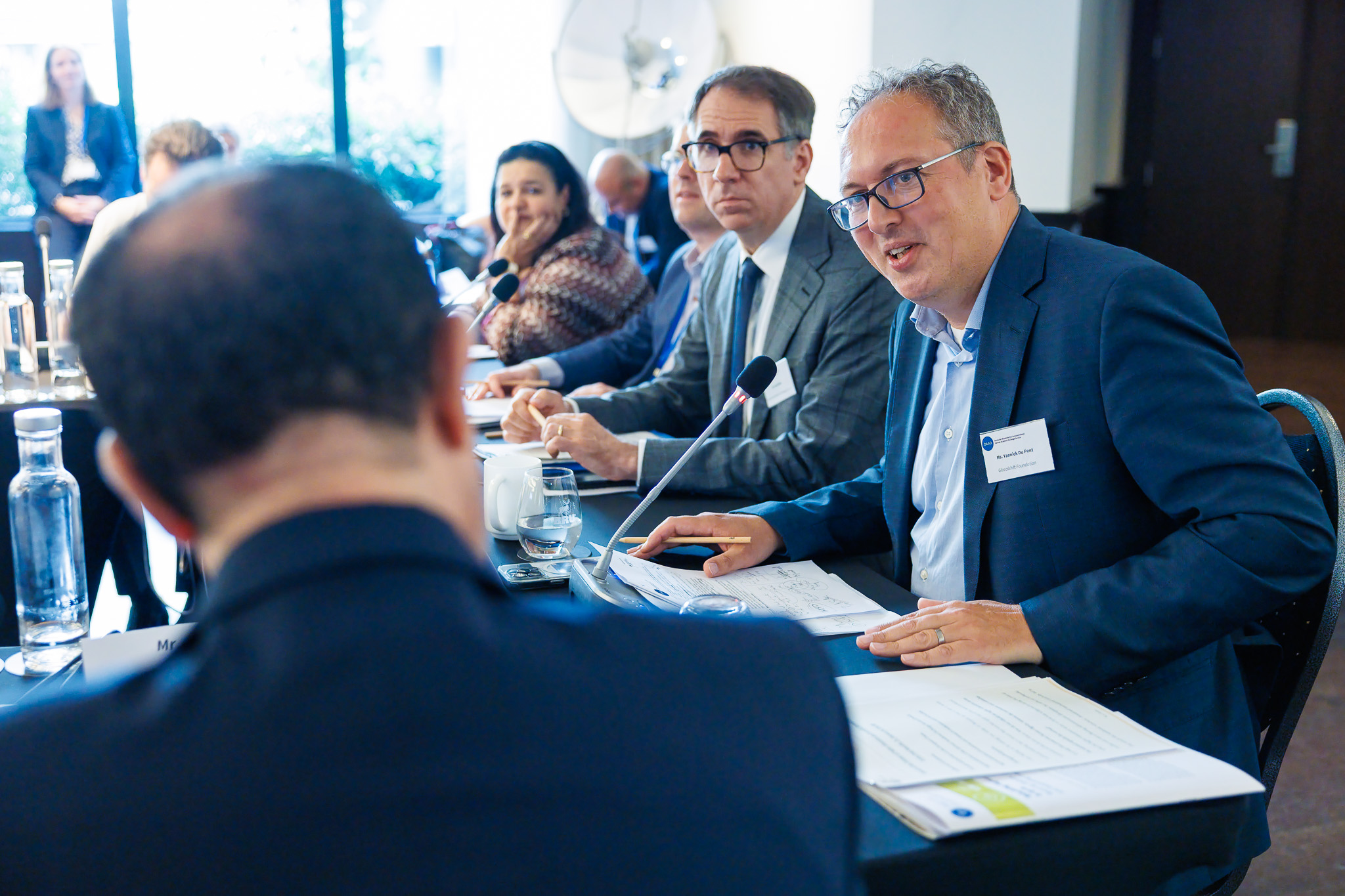
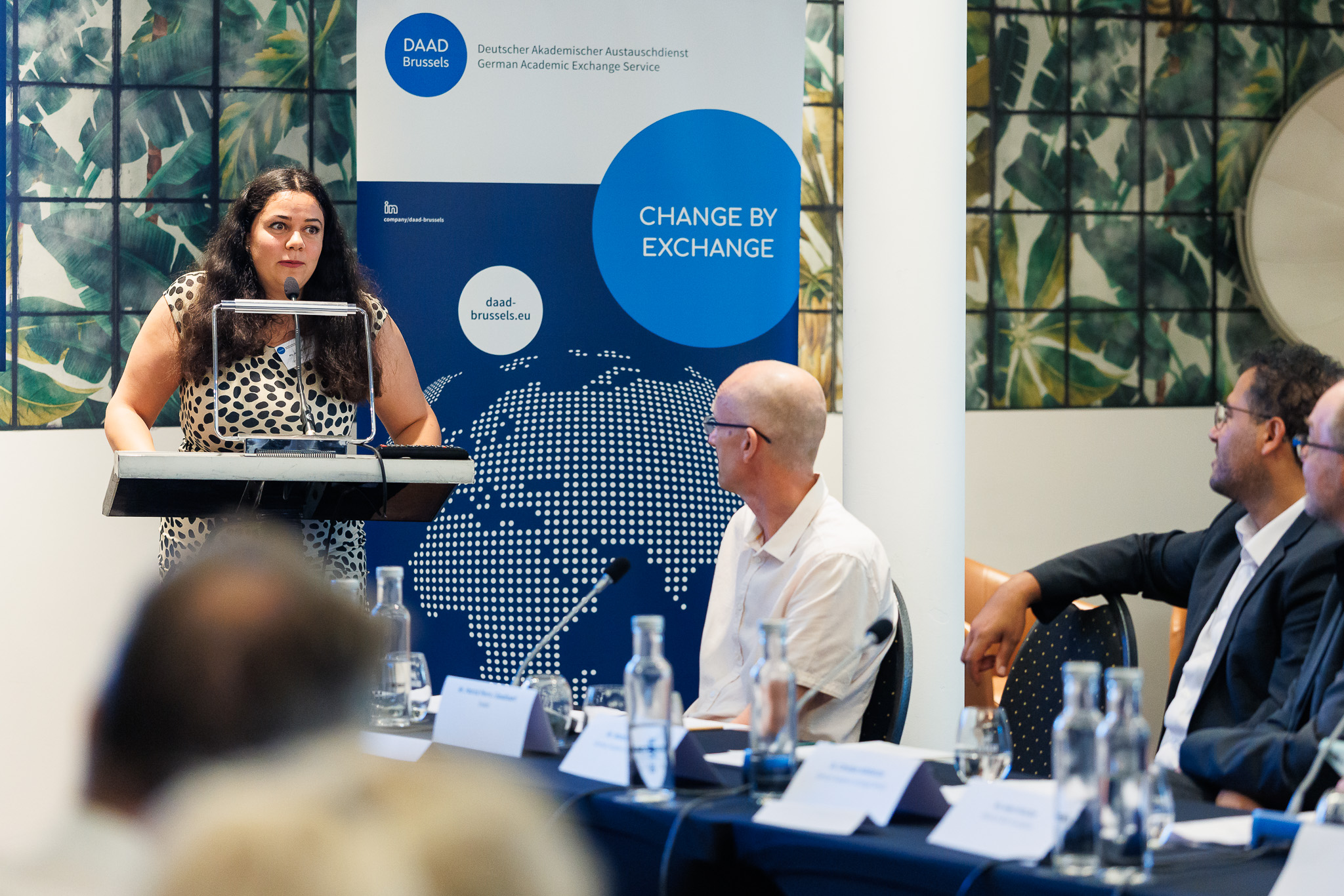
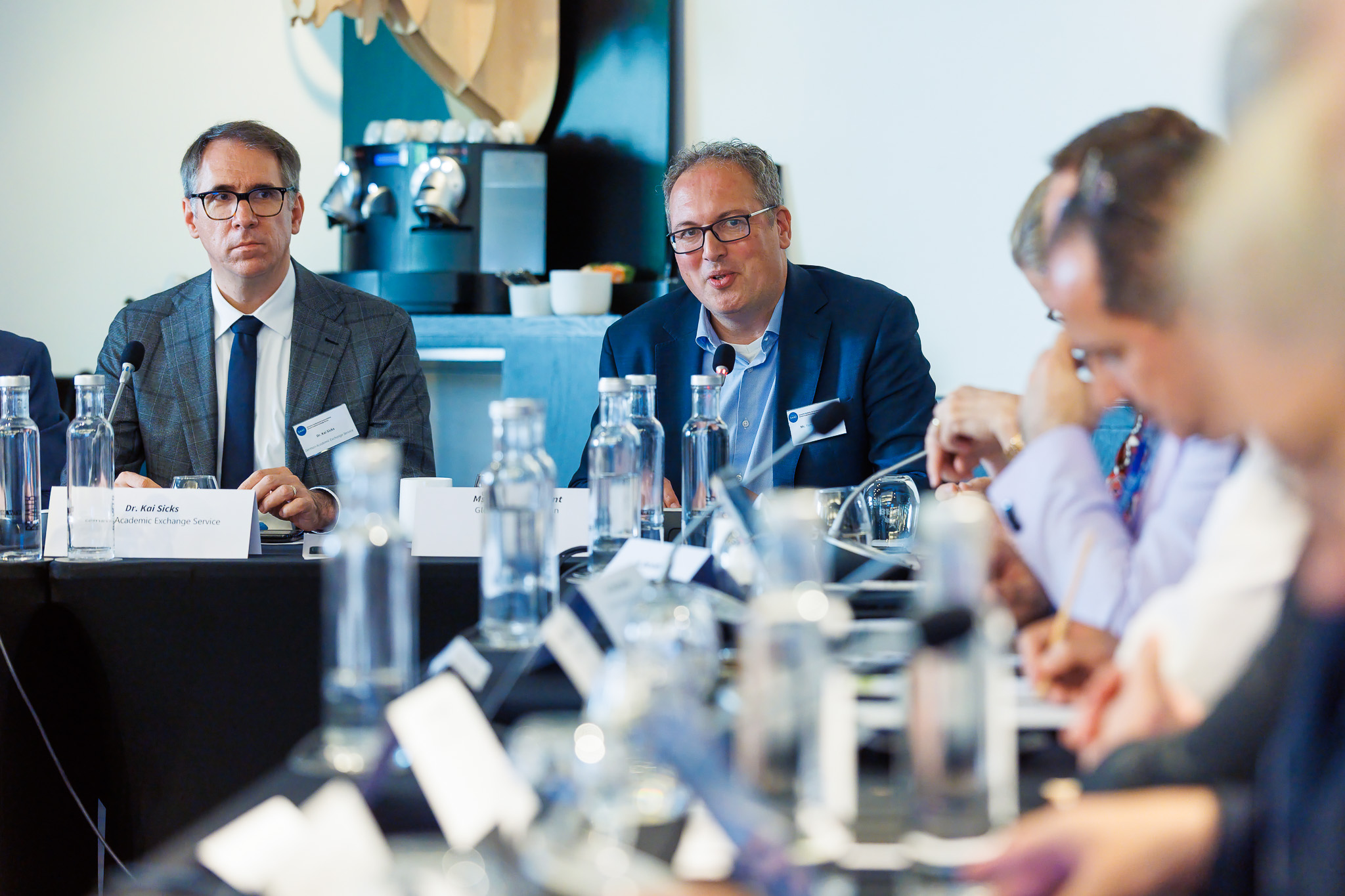
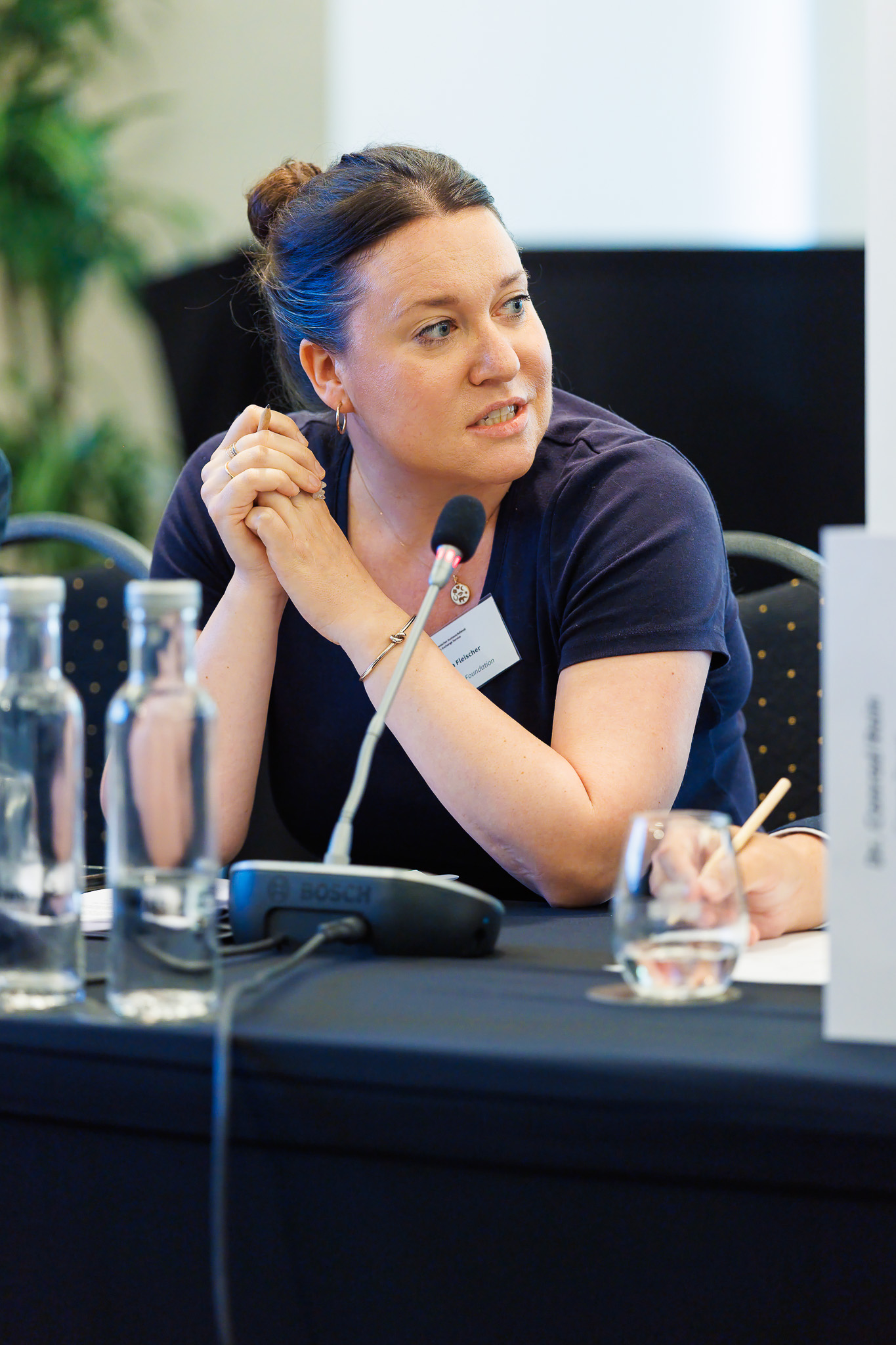
The first session focused on diverse initiatives led by the German Academic Exchange Service (DAAD), including scholarships, capacity-building workshops, and leadership programmes that aim to strengthen the academic skills of Syrian students and scholars and foster a new generation of leaders prepared to contribute to Syria’s reconstruction. In the second session, participants presented the initiatives of their own organisation in strengthening the Syrian higher education system and discussed the alignment of national, regional, and EU-supported initiatives.
A clear message emerged from the roundtable: higher education is a core pillar of long-term recovery and institutional resilience in Syria. Rebuilding universities goes beyond the investment in infrastructure and requires restoring institutions, governance, leadership, academic capacity, and trust in public knowledge systems.
In his address, Professor Marwan Alhalabi, Syria’s Minister of Higher Education and Scientific Research, emphasised that international cooperation must be aligned with national priorities and reinforce Syrian ownership of the reform process.
The discussions highlighted three key priorities for future cooperation:
- National ownership and alignment: International support should be demand-driven, respond to Syrian-defined priorities, and build on existing national institutions.
- Institutional strengthening: Alongside support for individual students and researchers, participants stressed the importance of investing in university governance, academic freedom, curriculum reform, and institutional capacity.
- Long-term partnerships: Sustainable cooperation between Syrian, European, and regional higher education institutions was identified as essential for avoiding fragmentation and ensuring lasting impact that goes beyond project-based support.
Representatives from the European Commission and the German Federal Foreign Office underlined the crucial role of higher education in educating future generations, fostering dialogue and peace, and contributing to resilience, social cohesion, and long-term stability in Syria and the wider region. Higher education is also essential in rebuilding state institutions, creating jobs and livelihoods, supporting returns, strengthening local governance, restoring essential services, and fostering trust, social cohesion, private sector engagement, and diaspora mobilisation.
The event also showcased DAAD’s longstanding engagement in supporting Syrian higher education through scholarship programmes, research mobility, Arabic-language capacity building, leadership development, and institutional partnerships.
A particular highlight of the roundtable was the contribution of Syrian alumni of the “Leadership for Syria” programme Mustafa Karahamad, Orwa Eyade, and Jumana Alasaad, who shared their personal experiences and reflected on the lasting impact of the programme. Their testimonies demonstrated how scholarship programmes can develop into enduring academic networks that continue to promote research collaboration, strengthen university partnerships, support institutional development, and contribute to Syria’s reconstruction.